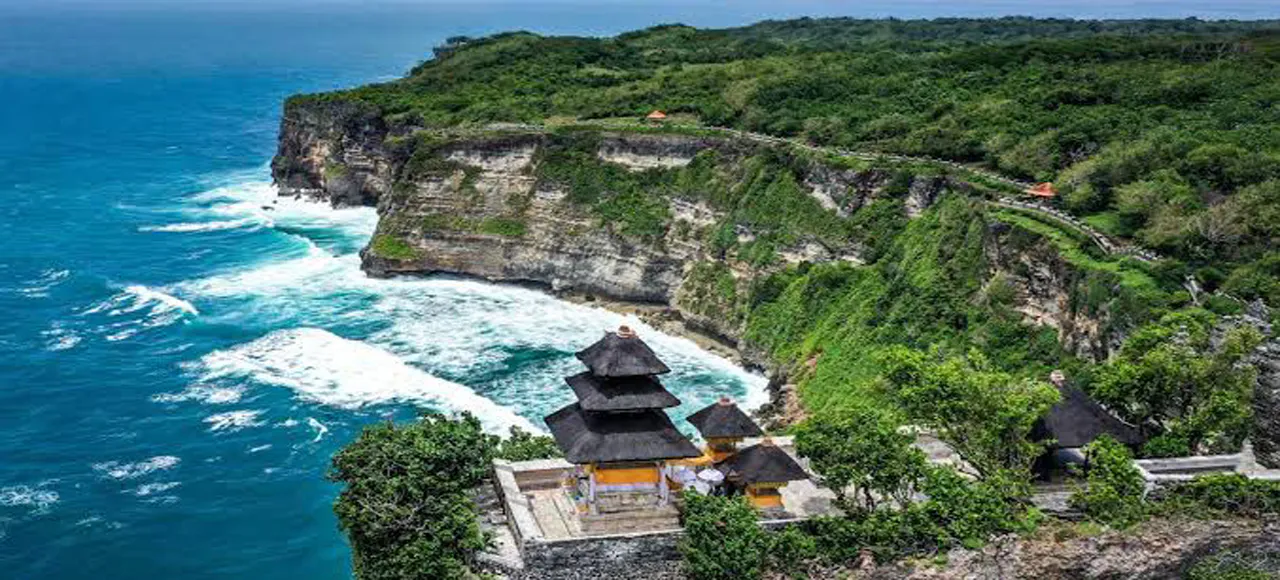
Uluwatu Temple, perched on a dramatic 70-meter cliff, is one of Bali’s most sacred sea temples, offering breathtaking ocean views and the legendary Kecak Dance at sunset. Nearby, Labuan Sait Beach is a hidden paradise known for its pristine white sands, crystal-clear waters, and world-class surfing waves. Both destinations are rich in history, culture, and natural beauty, making them must-visit sites in Bali.
As the official managing body of these attractions, we are committed to preserving their cultural heritage, natural beauty, and sustainability. Our mission is to enhance the visitor experience while maintaining the authenticity and sacredness of these iconic locations. We welcome you to explore, appreciate, and respect the wonders of Uluwatu and Labuan Sait.
Uluwatu Temple, or Pura Luhur Uluwatu, is one of the six key directional temples in Bali. Its exact founding date remains uncertain, but historical records suggest that the temple dates back to at least the 9th century, with evidence of an ancient candi kurung (split gateway) bearing a candrasengkala (chronogram) indicating the year 808 Isaka (886 AD).
The temple’s development is often attributed to Mpu Kuturan, a highly influential Hindu sage who arrived in Bali during the reign of King Sri Msula-Masuli in the 11th century. Mpu Kuturan introduced the concept of Tri Kahyangan, which classified Balinese temples into three spiritual centers: village temples, mountain temples, and sea temples. Uluwatu Temple was established as a sea temple, meant to protect Bali from negative spiritual forces coming from the ocean. Its dramatic location, perched on a 70-meter-high limestone cliff, symbolizes its role as a guardian of Bali’s southwestern coastline.