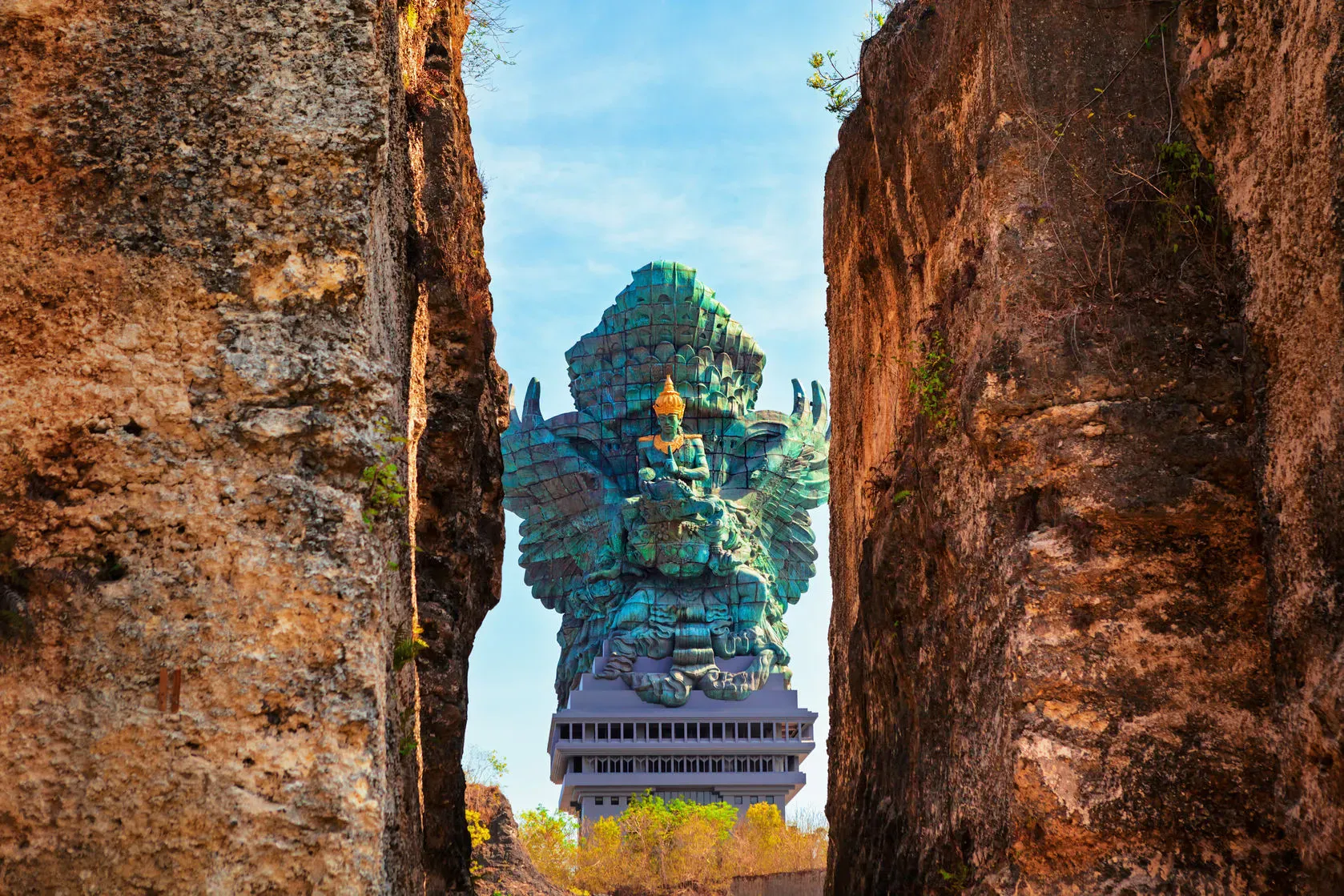
Garuda Wisnu Kencana (GWK) Cultural Park is one of Bali’s most iconic cultural landmarks, located in Ungasan, South Kuta, Badung Regency. The park is best known for the magnificent Garuda Wisnu Kencana statue, one of the tallest statues in the world, depicting the Hindu god Vishnu riding his mythical mount, Garuda.
Standing approximately 121 meters tall, the statue dominates the surrounding limestone hills and can be seen from many parts of southern Bali. GWK Cultural Park serves as a center for Balinese art, culture, and spiritual heritage, offering visitors breathtaking views, traditional performances, cultural exhibitions, and large open-air venues for international events.
The park features spacious plazas, sacred sites, and performance stages where visitors can experience traditional Balinese dances, music, and ceremonies. GWK Cultural Park is not only a tourist attraction but also a symbol of Bali’s deep spiritual values and artistic excellence.
History of Garuda Wisnu Kencana (GWK) Bali
The idea for the Garuda Wisnu Kencana statue was initiated by renowned Balinese artist I Nyoman Nuarta in 1989. Inspired by Hindu mythology, the statue represents Vishnu, the preserver of the universe, riding Garuda, a symbol of loyalty, courage, and devotion.
Construction of the statue began in 1997 but faced several delays due to financial challenges and the Asian economic crisis. After years of careful planning and engineering development, the project resumed and was finally completed in 2018.
The statue is made of copper and brass with a steel framework, designed to withstand strong winds and earthquakes. Its completion marked a significant milestone in Indonesia’s cultural history and established GWK as a national monument of pride.
Today, Garuda Wisnu Kencana Cultural Park stands as a testament to Indonesia’s rich cultural heritage, artistic vision, and spiritual philosophy, attracting visitors from around the world.