Goa Gajah – Description
Goa Gajah, also known as the Elephant Cave, is an ancient archaeological site located in Gianyar, Bali, Indonesia. It is surrounded by green trees, beautiful gardens, and a peaceful natural environment.
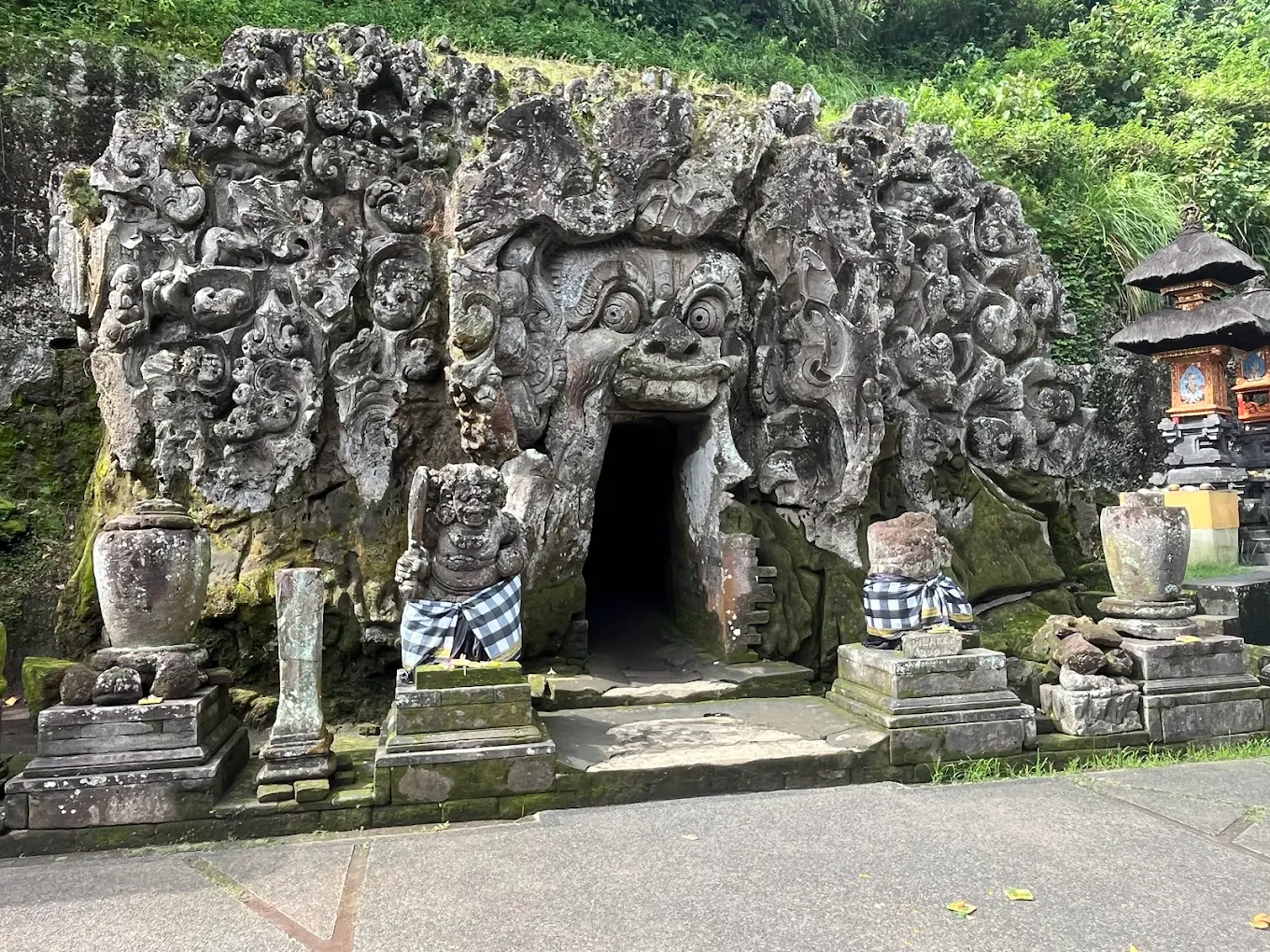
The main attraction is a cave with a large stone entrance decorated with detailed carvings. Inside the cave, visitors can see several ancient religious symbols and statues. The site also has bathing pools, stone sculptures, and other archaeological remains.
Goa Gajah is a popular destination for visitors who want to learn about Bali's history, culture, and ancient architecture.
Goa Gajah – History
Goa Gajah is believed to date back to around the 9th century. The site was an important religious place for both Hindu and Buddhist communities in ancient Bali.
The name "Goa Gajah" means "Elephant Cave," although the origin of the name is still uncertain. Some people believe it is related to an elephant statue or the elephant-like appearance of one of the carvings.
The site was rediscovered by Dutch archaeologists in 1923 after being hidden and forgotten for many years. Archaeological research later revealed that Goa Gajah contains important remains from Bali's ancient Hindu and Buddhist traditions.
Today, Goa Gajah is an important cultural and historical attraction in Bali and is visited by many tourists who want to explore its ancient heritage.